Salar de Uyuni 3-Day Tour Itinerary and Cost
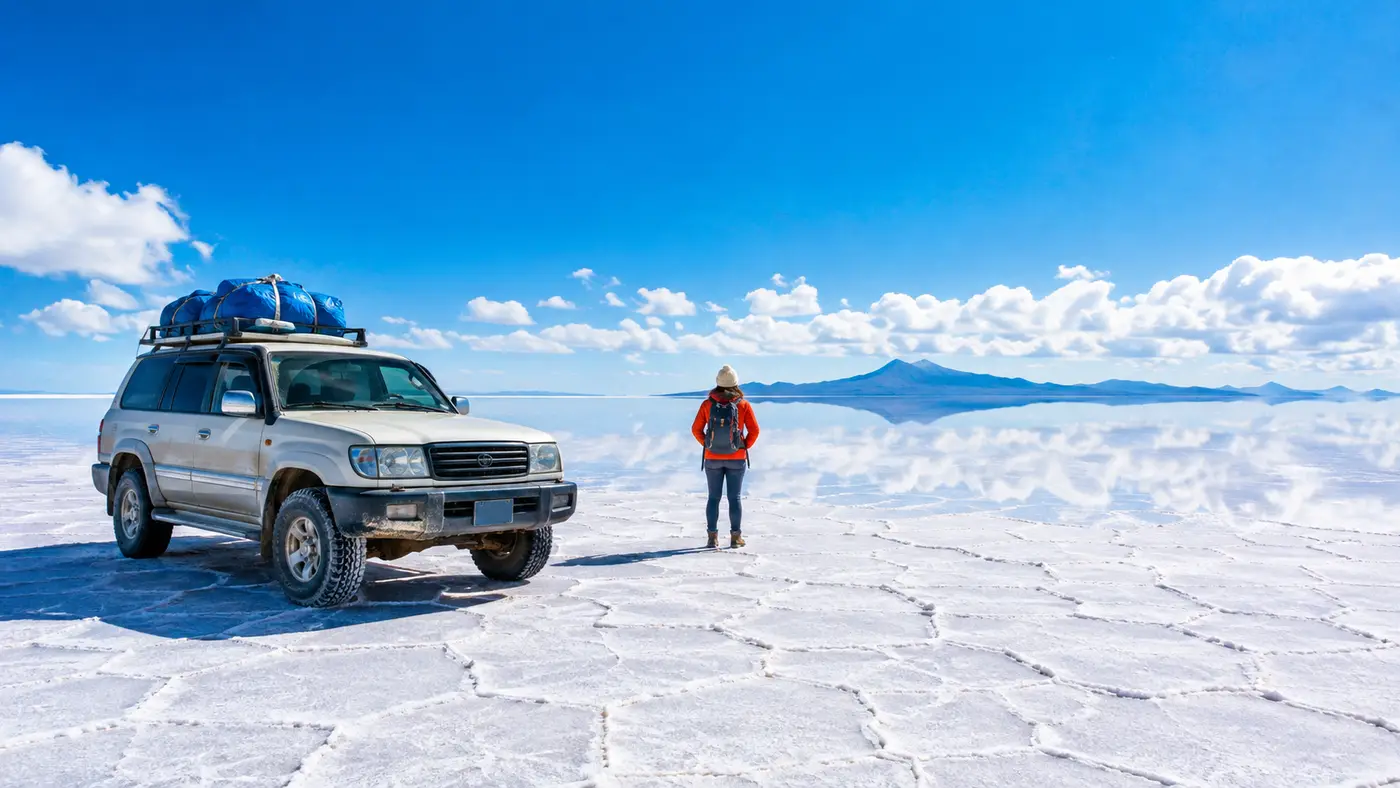
Your back will ache after twenty minutes on the corrugated dirt tracks. The Toyota Land Cruiser rattles constantly, your teeth vibrate, and your mouth tastes faintly of mineral dust. Still, nothing prepares you for the sheer scale of the landscape. Booking a 3 day tour salar de uyuni is the standard way travelers cross southwest Bolivia, starting on blinding white salt flats and ending near active sulfur vents at nearly 5,000 meters above sea level.
Most people arrive in Uyuni assuming the salt flat lasts the whole three days. It does not. You see the white plains on Day 1, take your silly perspective photos, and then leave them completely behind. The next forty-eight hours take you deep into the wild altiplano, a barren plateau filled with pink flamingos, jagged volcanic rock formations, and bitterly cold winds. If you want to know what actually happens on this trip, what it costs right now, and how to survive the nights, here is the unvarnished reality.
Book your Salar de Uyuni tour experience:
Day 1 on a 3 Day Tour Salar de Uyuni: The Salt Plains
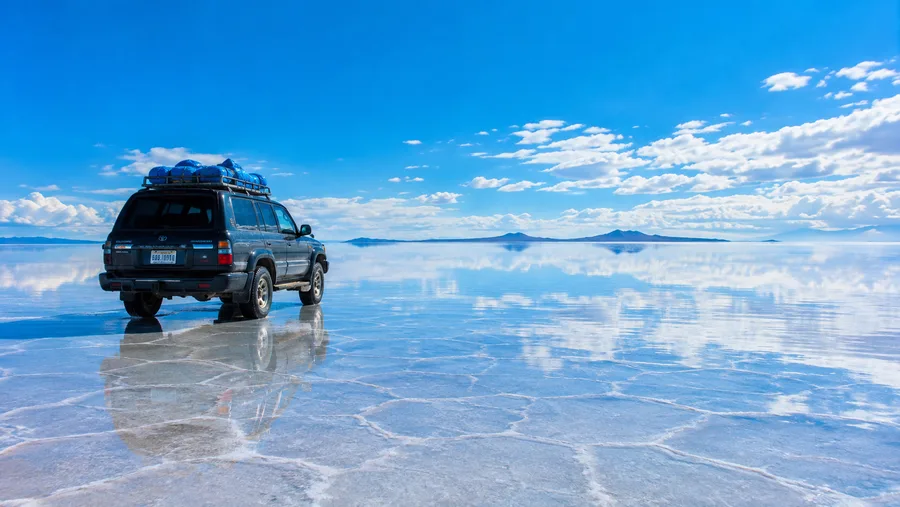
Tours start around 10:30 AM in Uyuni town. You meet your driver, load your heavy bags onto the roof rack wrapped in blue tarps, and climb into a 4x4 with five other strangers. The first stop is the Train Cemetery on the town outskirts. It sits three kilometers out, full of hollowed-out British locomotives abandoned in the 1940s when the mining traffic collapsed. Tourists climb on the rusted iron frames to take pictures. It feels a bit chaotic, but you spend only 30 minutes there before the driver herds everyone back inside.
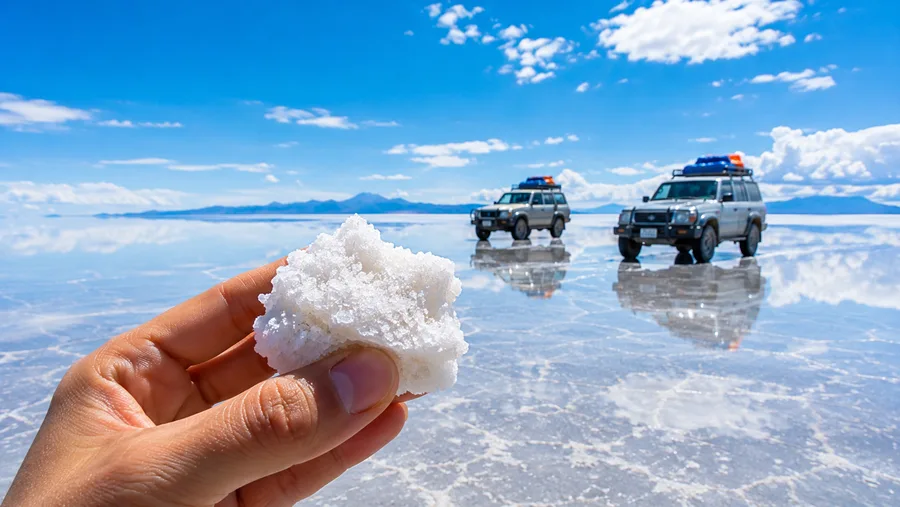
Next comes Colchani, a tiny roadside settlement where locals process salt extracted directly from the ground. Souvenir stalls line both sides of the dusty street. You can pick up cheap llama-wool hats or carved salt trinkets here. Honestly, most of it is tourist junk, but the bathroom stop is useful before you cross onto the salt itself. Once the wheels roll onto the white crust, the world changes instantly. The white stretches flat to the horizon, pure and quiet, broken only by hexagonal ridges formed as the water evaporates.
Pro tip: Bring a pair of slip-on sandals inside the jeep cabin. Stepping barefoot onto wet salt will sting every microscopic cut on your skin, and unlacing hiking boots three times an hour gets tedious fast.
Around 1:00 PM, drivers pull up near Incahuasi Island. This rocky outcrop rises right out of the salt pan, covered in giant candelabra cacti that grow just one centimeter every year. Some of them are eight hundred years old. Climbing the jagged path costs 30 Bolivianos, and the panoramic view from the summit is worth the burning in your lungs. After a cold lunch of quinoa, fried chicken, and sliced tomatoes unpacked from the trunk, you spend the afternoon taking forced-perspective photos on the salt flats. By sunset, you head to a salt hotel on the edge of the desert. The walls are blocks of salt, the beds are platforms made of salt, and the floor is coarse salt grains that crunch under your slippers.
Days 2 and 3: The Wild Altiplano and Eduardo Avaroa Reserve
Day 2 leaves the salt flat behind entirely. You head south toward the Chiguana Desert, passing inactive volcanoes and crossing railway tracks that lead to Chile. By midday, you reach a series of high-altitude lagoons: Cañapa, Hedionda, Chiarcota, and Honda. Laguna Hedionda smells strongly of sulfur, but hundreds of Andean, Chilean, and James's flamingos feed along the shallow edges, totally unbothered by the cold mountain breeze.
The road vanishes into loose sand and volcanic gravel. The vehicle bounces through the Siloli Desert, where wind erosion has carved bizarre sandstone sculptures over thousands of years. The most famous is the Arbol de Piedra, a five-meter rock shaped remarkably like a stunted stone tree. Watch your balance when climbing on nearby boulders; the thin air makes every step heavier than usual.
Note: The national park fee for the Eduardo Avaroa Reserve is 150 Bolivianos per person and must be paid in physical local cash. Park rangers do not take credit cards, US dollars, or torn banknotes.
The crown jewel of the second afternoon is Laguna Colorada. This massive lake sits at 4,278 meters and glows blood-red, a surreal color caused by pigmented algae and rich sediment reacting to strong sunlight and wind. White borax islands dot the red surface like floating icebergs. You sleep nearby in a remote, basic mountain refuge. These buildings have thick stone walls, no central heating, and shared rooms. When the sun goes down, temperatures routinely drop to -10°C or colder.
Day 3 starts before dawn, usually around 4:30 AM. Your breath freezes in the dark cabin. The driver takes you straight to the Sol de Mañana geysers at 4,850 meters. Steam hisses loudly out of deep fissures in the earth, and gray mud bubbles violently in open pits. There are no guardrails here. Step carefully. From there, you drive to the Polques thermal springs, where a 20-minute dip in 38°C water feels miraculous after a freezing night. The tour finishes at Laguna Verde, a turquoise lagoon sitting beneath the massive Licancabur volcano, before vehicles either head back to Uyuni or drop passengers at the Hito Cajón border for an Atacama route transfer into Chile.
Cost Breakdown: Salar de Uyuni 3 Day Tour Price 2025
Pricing for a tour salar de uyuni 3 días 2 noches varies depending on group size, language requirements, and comfort levels. For a standard group trip with six passengers in a Land Cruiser, the salar de uyuni 3 day tour price 2025 sits between $160 and $210 USD per person. That price covers your driver, transport, meals, and two nights of dormitory accommodation.
Private trips cost substantially more. If you want a private vehicle with just two people, a dedicated cook, and heated hotel rooms at places like Hotel Tayka del Desierto, expect to pay between $650 and $1,100 USD per person. The salar de uyuni 3 day tour price 2025 usd reflects steady fuel and maintenance costs in Bolivia, though park fees remain strictly cash only.
| Tour Category | Approximate Cost (USD) | Sleeping Arrangements | Guide Language |
|---|---|---|---|
| Standard Shared Tour | $170 - $210 | Shared dorms, shared bathrooms | Spanish-speaking driver only |
| Shared with English Guide | $250 - $340 | Salt hotel, basic mountain refuge | Dedicated English-speaking guide |
| Private Standard | $450 - $650 per person | Private rooms with private bath | Spanish or English available |
| Luxury Private (Tayka Hotels) | $800 - $1,250 per person | Heated boutique eco-hotels | Certified bilingual guide + private chef |
Do not forget the out-of-pocket expenses that operators never bundle into the base quote. You must carry physical cash in Bolivian currency for these extras:
- Incahuasi Island entrance: 30 BOB per person, paid at the small visitor shack near the cactus trail.
- Eduardo Avaroa Reserve ticket: 150 BOB per person, valid for four days across the park.
- Polques hot springs fee: 6 BOB to use the outdoor pool and rustic changing rooms.
- Public toilet access: 2 to 5 BOB each time, common at lunch stops and fuel points.
- Sleeping bag rental: 50 BOB for the full trip, arranged directly with your agency in Uyuni town.
Book your Salar de Uyuni tour experience:
Choosing Between a Salar de Uyuni 2 Day Tour and 3 Days
Travelers short on time often ask about a salar de uyuni 2 day tour. While a few agencies advertise a two-day option, it is a strange compromise. You spend Day 1 on the salt flats and Day 2 racing down to Laguna Colorada before driving six long, exhausting hours straight back to Uyuni over terrible roads.
If you only have 24 hours, you are better off taking a 1-day trip that focuses exclusively on the salt flat, sunset, and star reflections. But if you have more time, commit to the full salar de uyuni tour 3 dias. The high-altitude desert landscapes south of the salt pan are what make southwest Bolivia truly unique. Skipping them means missing the pink lagoons, the bizarre rock formations, and the surreal dawn steam at Sol de Mañana.
Keep these differences in mind when choosing your operator:
- Vehicle condition: Ask to see the 4x4 before paying. Worn tires or cracked windshields are bad signs for a 900-kilometer overland route.
- Seat rotation: Clarify with your group on morning one that passengers rotate window seats daily to prevent silent resentment.
- Dietary needs: Inform the agency beforehand if you do not eat meat. Field lunches lean heavily toward cold sausages and tuna cans unless specified.
- Drop-off destination: Confirm whether your vehicle returns to Uyuni or drops you at the Chilean border for San Pedro de Atacama.
Surviving the High Altitude, Cold, and Rough Logistics
The altitude on this uyuni 3 day tour is brutal if you arrive unprepared. Uyuni town sits at 3,700 meters. By Day 2, you cross passes above 4,400 meters, and the geysers on Day 3 sit near 4,900 meters. That is higher than Mont Blanc. If you take a night bus straight from La Paz or Sucre and start the tour two hours later, your head will pound, your stomach will turn, and you will likely spend the second night vomiting into a cold porcelain bowl.
Spend at least two full days resting in Sucre, La Paz, or Potosí before starting this route. Drink three liters of water daily, skip alcohol, and chew coca leaves or drink mate de coca if your head begins to throb. Acetazolamide pills help, but start taking them 24 hours before ascending.
Then there is the cold. Between May and September, night temperatures in the Siloli Desert easily hit -15°C. Basic shelters do not have heating. The stone walls hold the mountain frost, and the single heavy wool blanket on your bed is never quite enough. Rent an extra sleeping bag from your tour agency in Uyuni for 50 Bolivianos. It is the best money you will spend on the entire South American continent.
Electronics hate the cold altiplano climate. Lithium-ion batteries drop from 80 percent to zero in thirty minutes when exposed to freezing air. Keep your camera, phone, and power banks inside wool socks, and sleep with them tucked at the bottom of your sleeping bag. Outlets at the refuges are sparse, frequently dead, and electricity shuts off entirely around 9:30 PM once the generator cuts out.
Frequently Asked Questions about 3 day tour salar de uyuni
What is the best month to book a 3 day tour salar de uyuni?
May to November brings dry weather, clear skies, and accessible roads across the altiplano. January through March is the rainy season, which creates the famous mirror effect on the salt flats but often floods parts of the route, cutting off Incahuasi Island.
Can I end the tour in San Pedro de Atacama, Chile?
Yes. Most agencies offer a transfer on Day 3. After visiting Laguna Verde, a mini-bus picks you up at the Bolivian border post at Hito Cajón and drives you down forty minutes into San Pedro de Atacama. You must arrange your Chilean visa requirements beforehand.
Are there hot showers on the standard tour?
On night one, salt hotels usually offer hot showers for an extra 10 to 15 Bolivianos, though water pressure is weak. On night two in the high-altitude refuge, running water is often frozen solid or non-existent, so pack wet wipes.
How much cash should I bring on the tour?
Bring at least 350 to 400 Bolivianos per person in small denominations. This covers park entrance fees, island tickets, bathroom stops, thermal springs, snacks, and extra bottled water. ATMs do not exist once you leave Uyuni.
Quick Reference
- Standard shared cost: $170 to $210 USD
- National park entry: 150 BOB (cash only)
- Highest point reached: 4,850 meters (Sol de Mañana)
- Lowest night temperature: -15°C (winter months)
- Group size: 6 passengers per 4x4 Land Cruiser
Book your Salar de Uyuni tour experience:
The Bottom Line
This trip is dusty, freezing, and physically demanding. You spend six to eight hours a day wedged into a rumbling Land Cruiser, wiping salt crust off your sunglasses and shivering under dusty wool blankets in remote mountain refuges. Yet, standing on a blood-red lagoon surrounded by wild flamingos while steam curls off nearby volcanic peaks makes every bit of discomfort fade into the background. Go in with realistic expectations, carry plenty of cash and warm wool socks, and you will walk away with memories of one of South America's truly raw wilderness journeys.
Read more about Salar de Uyuni tour.