Atacama to Salar de Uyuni Tour Guide
You leave San Pedro de Atacama around seven in the morning while the air is still biting cold. Within an hour, the paved Chilean highway climbs steeply into the Andes, leaving the oasis behind as the landscape strips down to gravel, yellow bunchgrass, and immense volcano silhouettes. Taking an atacama salar de uyuni tour is easily one of the most dramatic overland border crossings on earth. You start in the world's driest desert, climb through a moonscape of radioactive-colored lakes and steaming geysers, and finish on a blinding plain of pure white salt that stretches to the curve of the earth.
Most travelers treat this journey as simple transit between Chile and Bolivia. It is so much more than a bus ride. Over three or four days, you live out of an old Toyota Land Cruiser, rattling over dirt tracks with no phone service, eating whatever soup your driver ladles into a plastic bowl, and sleeping in unheated stone buildings at 4,200 meters. It is rough, dusty, occasionally exhausting, and completely unforgettable.
Book your Salar de Uyuni tour experience:
Choosing Your Salar de Uyuni and Atacama Desert Tour Route
You have two practical choices when booking: a three-day one-way trip that finishes in the dusty railway town of Uyuni, or a four-day round-trip loop that drives you right back to San Pedro. If Bolivia is just the next stop on a longer South American backpacking route, do the three-day trip. You hop out in Uyuni by mid-afternoon on the third day, grab an empanada, and take a night bus north toward La Paz or Sucre.
The four-day loop exists for travelers who booked round-trip flights into Chile. If you are flying in and out of the region via El Loa Airport, searching for a tour salar de uyuni desde calama is common, though almost all operators actually depart out of San Pedro de Atacama, an hour east of the runway. On day four of the return tour, you essentially wake up at 5:00 AM and spend seven straight hours driving in reverse across the bumpy Altiplano back to the border. It is a long, tedious day of driving, but it solves the logistics if your rental car or return ticket waits in Chile.
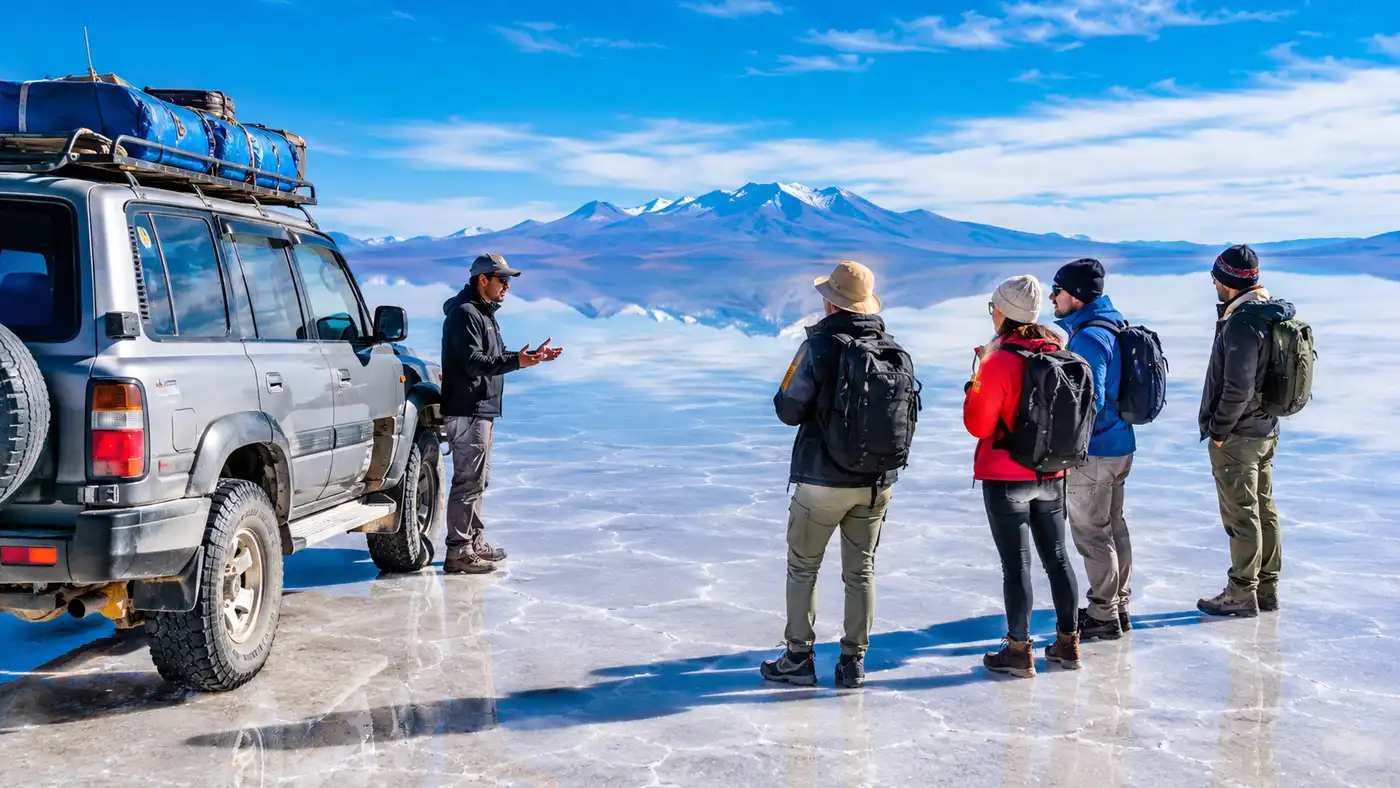
Private tours follow the exact same trails as the budget shared groups. You just get more legroom, control over music, and the ability to ask the driver to stop for photos whenever a wild vicuña darts across the track. Shared groups squeeze six passengers into the vehicle, three in the middle bench and two in the small fold-down jump seats in the trunk. If you end up in the back seats, rotate with your group every morning so one person does not spend three straight days with their knees pressed against their chin.
| Tour Format | Duration | Typical Cost (USD) | Ending Point | Best For |
|---|---|---|---|---|
| Standard Shared (One-Way) | 3 Days / 2 Nights | $190 - $240 | Uyuni, Bolivia | Backpackers continuing through Bolivia |
| Standard Shared (Round-Trip) | 4 Days / 3 Nights | $260 - $310 | San Pedro de Atacama | Travelers with return flights from Calama |
| Private 4x4 Expedition | 3 Days / 2 Nights | $900 - $1,400 (per car) | Uyuni or San Pedro | Photographers, families, comfort seekers |
Shared departures leave every single morning, year-round. You do not strictly need to book months in advance unless you are dead set on a specific high-end operator or traveling over Christmas week. Walking along Calle Caracoles in San Pedro two days before your planned departure will usually turn up an open seat in a 4x4.
Crossing Hito Cajón on Salar de Uyuni Tours from San Pedro
The morning begins with a Chilean minibus collecting you from your hostel. You stop first at the immigration office on the edge of San Pedro to stamp out of Chile. Keep your passport and your little white PDI paper in hand. Then the bus grinds up Route 27 toward the border outpost of Hito Cajón. In less than forty-five minutes, you ascend from 2,400 meters to over 4,400 meters above sea level.
Note: Bolivian immigration requires you to hand over your Chilean PDI slip along with your passport. If you lose that small white receipt before the border, Chilean border police will make you return to town to pay a fine.
Hito Cajón is bleak, cold, and windswept. There is a small stone building where you stamp into Bolivia, pay your park entrance fee in cash, and meet your Bolivian guide. Here, the comfortable Chilean minibus turns back. You pile heavy duffels onto the roof rack of a battered 4x4, watch the driver lash everything down with frayed blue nylon rope under a thick canvas tarp, and climb inside. Pavement ends the second you cross the border line. For the rest of the trip, you travel over washboard dirt, sand dunes, and bedrock.
The transition is jarring. The landscape inside the Eduardo Avaroa Andean Fauna National Reserve looks like another planet. You pull up to Laguna Blanca, where borax deposits make the water look like milk, and then Laguna Verde, sitting below the perfect cone of Licancabur volcano. Toxic levels of arsenic and copper give the water its eerie turquoise sheen. The wind howls across the lake surface so hard it feels difficult to draw a full breath.
By lunchtime, most operators pull into the Polques thermal springs. Sitting in a steaming pool of natural mineral water while looking out over an icy lagoon and freezing wind is absurdly good. Pack your swimwear right near the top of your daypack so you do not have to unstrap the dusty roof rack luggage in the dirt parking lot.
Surviving the High Altiplano: Cold, Altitude, and Basic Refugios
Altitude is the real test of a salar de uyuni and atacama desert tour. You spend the entire first night sleeping at around 4,300 meters, which is roughly the height of Mount Rainier. If you have not spent at least two full days acclimatizing in San Pedro before starting, you will probably get a splitting headache, nausea, or insomnia. Buy some coca leaves in San Pedro, chew them into a small ball in your cheek, and drink double the amount of water you think you need.
The accommodations on night one are universally basic on standard tours. You stay in rustic stone hostels run by indigenous families out in the desert near Laguna Colorada. Expect concrete floors, thick wool blankets, and electricity that shuts off entirely around 9:30 PM. Running water is unpredictable. Sometimes the pipes freeze solid overnight, meaning morning flushes require a bucket of icy water scooped from a plastic drum.
Pro tip: Bring crisp, uncreased US dollars or freshly exchanged Bolivian bolivianos. Border guards and park wardens at Eduardo Avaroa Reserve flatly reject foreign bills with even microscopic tears or pen marks.
Night temperatures on the Altiplano frequently drop to -10°C between June and September. The stone rooms have no heating. Renting a sleeping bag from your tour agency in San Pedro is well worth the extra $15 fee, even if the agency promises the hostel has plenty of blankets. You will want that down layer tucked over your face when the wind rattles the thin window panes at 3:00 AM.
Packing for this journey requires ruthless organization, because you cannot open your main backpack during the driving day. Keep these essentials inside a separate small daypack between your feet:
- High-SPF sunblock and lip balm: The sun at 4,500 meters burns uncovered skin within twenty minutes, and dry desert air cracks lips immediately.
- Warm hat and thermal gloves: Morning wind chills bite hard, especially at the Sol de Mañana geysers.
- Large water bottle: Tour drivers provide water during meals, but you need at least two liters of personal water per day for altitude hydration.
- Stash of toilet paper and wet wipes: Refugio bathrooms almost never stock paper, and hot showers are rare.
- Portable battery pack: Extreme cold drains smartphone batteries in minutes, and wall outlets in shared refugios are scarce.
Book your Salar de Uyuni tour experience:
The Salt Flats Finale on Salar de Uyuni Tours from San Pedro de Atacama
On morning three, you leave your hotel around 5:00 AM to enter the Salar de Uyuni before dawn. You drive in total darkness across flat plains, following tire tracks only your driver can see. Then, the ground suddenly changes. The engine quietens, the bumps disappear, and your tires begin humming smoothly over hard, crystalline salt.
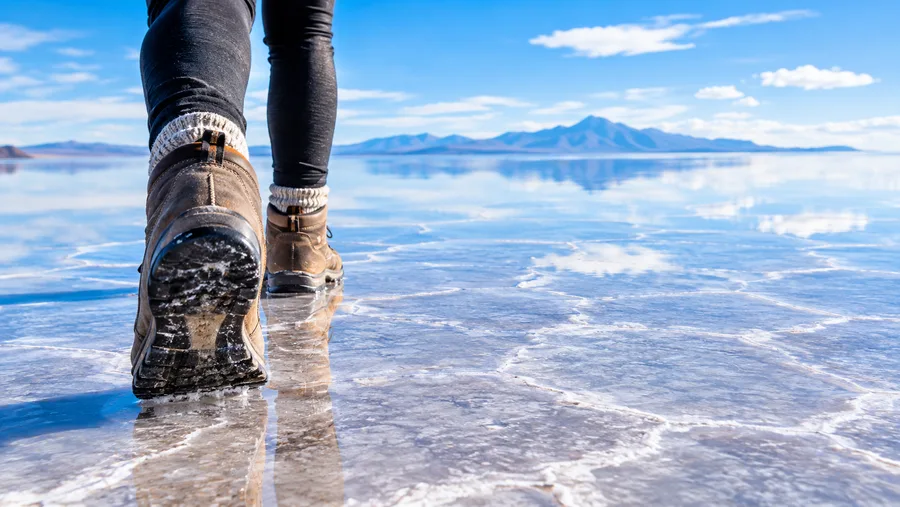
Watching sunrise on the salt flats resets your brain. The horizon dissolves into thirty shades of pastel pink and blue. If you are traveling between May and November, the salt is bone dry, formed into endless interlocking hexagonal ridges that crunch like gravel under your boots. If you want a detailed breakdown of daily stops, check our 3-day Salar de Uyuni itinerary for the full timetable.
In the middle of this white emptiness rises Incahuasi Island, a hill of petrified coral covered in thousands of giant trichocereus cacti, some growing twelve meters tall. Climbing to the top takes maybe twenty minutes, but at 3,650 meters, your lungs will notice every stone step. The view from the crest is startling. There are no trees, no mountains close by, nothing but blinding white salt extending toward the curve of the horizon.
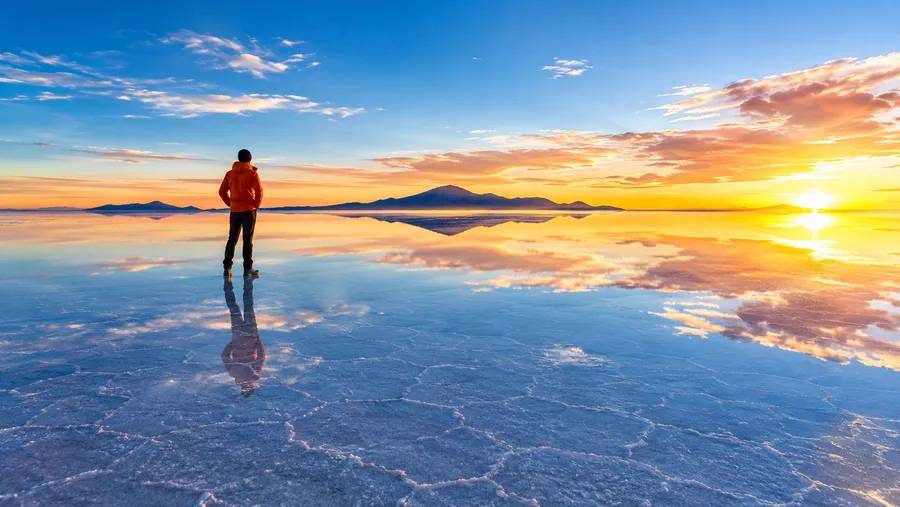
Timing your trip changes the entire visual reality of the flats. Visiting between January and March means you might catch the famous mirror effect, when summer rains flood the salt with a few inches of standing water. If that reflection is your main goal, read up on the best months to see the mirror effect before booking your dates. Driving across the flooded flats is slower, and vehicles often cannot reach Incahuasi Island due to deep water, but the reflection photos are extraordinary.
After a lunch break on the salt, most groups visit the Colchani artisan stalls, where local families harvest salt for table use, and finish at the Train Cemetery outside Uyuni. Dozens of rusted British steam locomotives from the late nineteenth century sit abandoned in the sand, covered in graffiti and red rust. It feels like a playground for photographers, though climbing on the rusted steel requires care.
Evaluating Agencies and Booking Logistics
Dozens of storefronts sell salar de uyuni tours from san pedro de atacama. The secret of the route is that Chilean agencies do not actually run the Bolivian leg. They handle your paperwork in town, put you on the morning transfer bus, and hand you over to a Bolivian partner company at the Hito Cajón border station. Because of this arrangement, paying premium prices at a flashy agency in San Pedro does not always guarantee a better car or driver once you cross into Bolivia.
Drivers act as mechanic, navigator, and cook throughout the journey. A safe, experienced driver makes or breaks this expedition. Spanish is the universal language on these tracks. Unless you book a high-end private expedition with an explicit English-speaking guide, your driver will speak standard Bolivian Spanish, describing the landscape during meal stops and pointing out herds of vicuñas or pink flamingos along the lagoons.
When shopping for a tour desierto de atacama salar de uyuni along the dirt streets of San Pedro, keep a few critical questions in mind:
- Vehicle seat count: Confirm that the vehicle carries no more than six passengers plus the driver, giving everyone a window or aisle view.
- Emergency oxygen tank: Verify the 4x4 carries a functioning oxygen tank for high-altitude emergencies on night one.
- Included entrance fees: Clarify whether the quote includes the Eduardo Avaroa Reserve fee (150 BOB) and Incahuasi Island entry (30 BOB).
- Luggage restrictions: Ask about space limits, though standard 60-liter backpacks strapped under the roof tarp are almost always fine.
Expect to pay somewhere between $190 and $240 USD for a standard shared three-day trip. If an agency quotes you $130, they are cutting corners on vehicle maintenance, driver wages, or food quality. It is simply not worth saving forty bucks when your vehicle is navigating isolated dirt tracks 100 kilometers from the nearest hospital.
Frequently Asked Questions about atacama salar de uyuni tour
Can you do the tour starting from Calama?
Most travelers look for a tour salar de uyuni desde calama because they land at Calama airport, but almost all tours physically depart from San Pedro de Atacama. You take a shared airport shuttle directly from Calama to San Pedro (about 75 minutes, roughly $15 USD), sleep in San Pedro, and start the tour from town early the next morning.
How bad is the altitude sickness on this crossing?
Because you climb from 2,400 meters in San Pedro to over 4,400 meters at the border in just a few hours, mild symptoms like lightheadedness and headaches are very common. Spend at least two nights exploring the Atacama Desert to acclimatize before crossing into Bolivia, avoid heavy alcohol the night before, and stay hydrated.
Do you need a visa to cross at Hito Cajón?
It depends on your nationality. Many European, British, and Australian travelers get a free stamp on arrival, while US citizens must obtain a Bolivian tourist visa, which costs $160 USD cash and requires paperwork like hotel bookings, bank statements, and printed passport copies. Check current consular requirements before arriving at the border, because Hito Cajón has limited facilities.
Are private bathrooms available during the tour?
On budget shared tours, the first night near Laguna Colorada usually features shared dorms and communal bathrooms with no hot water. The second night, near Colchani or the edge of the salt flat, is typically in a salt hotel with private bathrooms and reliable hot showers. Private luxury tours use high-end eco-lodges with private heated rooms every night.
Quick Reference
- Elevation spans 2,400m to roughly 4,900m at highest pass
- Shared tours cost $190 to $240 USD one-way
- Pack warm layers; night temps drop below -10°C
- Carry 250+ Bolivian Bolivianos cash for park entry and baths
- Border crossing happens at remote Hito Cajón post
Book your Salar de Uyuni tour experience:
The Bottom Line
Crossing from the Atacama into Bolivia by 4x4 is rarely comfortable, but it remains one of the greatest overland adventures left on the continent. You will freeze in basic stone dorms, pick red sand out of your teeth, and bump over trackless desert for hours on end. Then you stand on the crust of Salar de Uyuni at dawn, watching the sky ignite above an infinite expanse of white crystal, and none of the dust matters. Acclimatize in San Pedro for a few days, pack your thermals, keep a pocket full of bolivianos, and let the Altiplano work its magic.
Read more about Salar de Uyuni tour.