Top Things to Do in Salar de Uyuni
Most people arrive at the edge of the Bolivian altiplano expecting a quick photo stop, but the sheer scale of this place alters your perception of distance within minutes. Planning your list of things to do in salar de uyuni means grappling with over 10,000 square kilometers of blinding, hexagonal crust that sits more than 3,650 meters above sea level. The air is thin and completely silent. Your skin dries out almost immediately, and sunglasses are not an optional fashion accessory here unless you fancy temporary snow blindness.
This stark basin belongs to the Potosí department, tucked away in southwest Bolivia near the Chilean border. Whether you approach it as a brisk day trip or part of a bone-rattling multi-day overland crossing into the Atacama, salar de uyuni potosí bolivia serves up landscapes that feel less like South America and more like the floor of an evaporated alien ocean. You will find petrified coral islands, rusted nineteenth-century trains, sulfurous volcanic craters, and pink flamingos feeding on crimson algae. It is chaotic, cold, dusty, and brilliant.
Book your Salar de Uyuni tour experience:
Climbing Incahuasi Island Among Giant Cacti
Rising abruptly out of the white horizon, Isla Incahuasi looks like the back of a sleeping reptile. It is actually the top of an ancient, submerged volcano covered in fossilized coral reefs from when Lake Minchin covered the basin tens of thousands of years ago. Walking the narrow, rocky trail takes your breath away, partly because of the scenery and partly because the trail climbs up to around 3,700 meters where oxygen is scarce.
Giant trichocereus cacti cover the slopes. They grow at an agonizing rate of roughly one centimeter per year, which means the twelve-meter monsters towering above the path have been standing here since the late medieval period. Standing next to one while looking out over an endless white ocean gives you vertigo. You pay 30 Bolivianos at the entrance hut near the small cafe, and that ticket gives you access to the loop trail and the rudimentary eco-toilets.
Most tour convoys pull up here around 11:00 in the morning. If your driver can get you to the base by 8:30 or let you stay until past 16:30, you get the stony ridge practically to yourself. Walking the full loop takes roughly 45 minutes if you stop to catch your breath and inspect the fossilized brain corals embedded in the limestone.
Pro tip: Wear stiff-soled hiking shoes here because the fossilized coral rocks along the summit trail are razor-sharp and will shred thin sneakers or sandals in minutes.
Mastering Perspective Shots and Chasing the Mirror Effect
Because the salt flat is almost mathematically level - the elevation varies by less than a meter over the entire expanse - you lose all depth perception. A toy dinosaur set four inches from a phone lens looks like an apex predator hunting your travel companions twenty paces behind it. Finding creative salar de uyuni photography angles is easily one of the most entertaining things to do in salar de uyuni, even if your knees get coated in salt crystals while you lie on the hard crust trying to line up the shot.
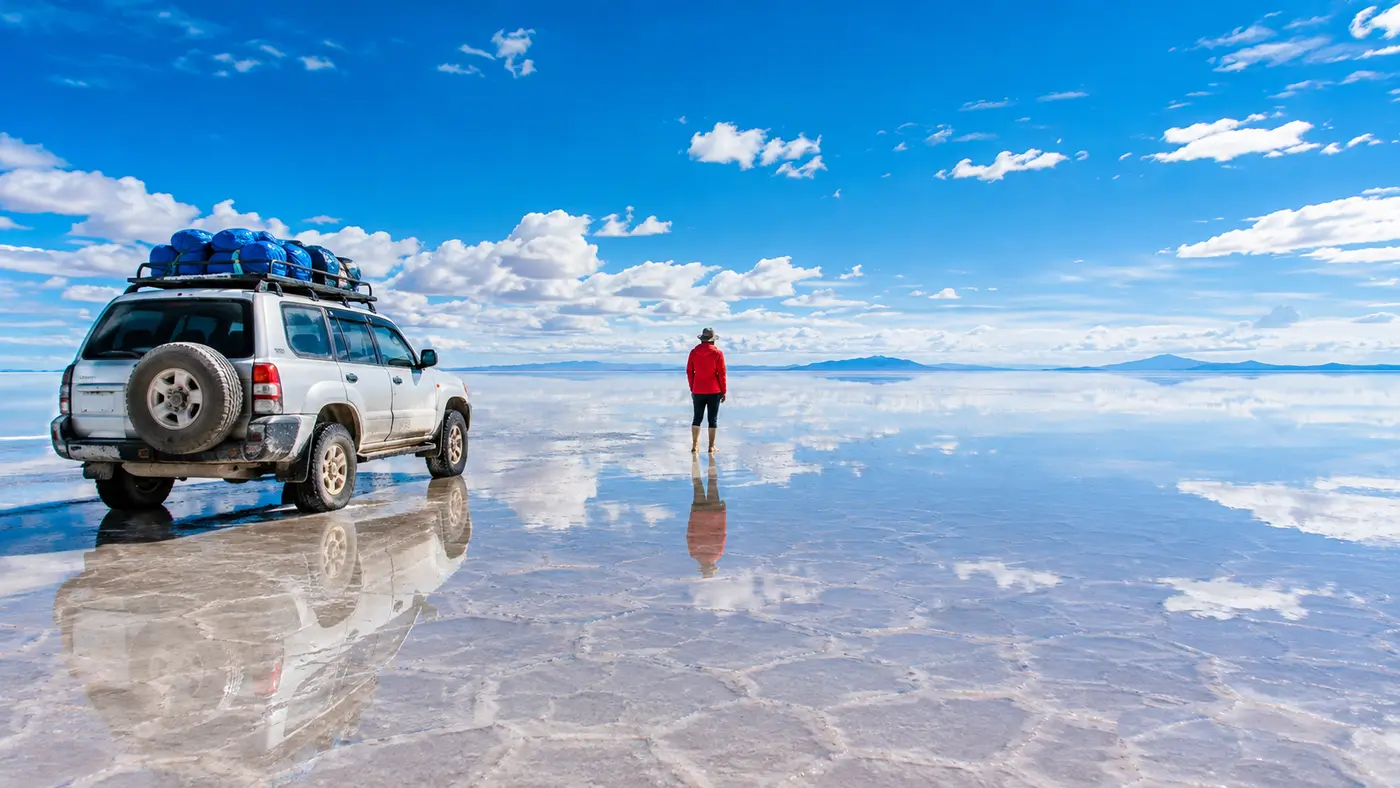
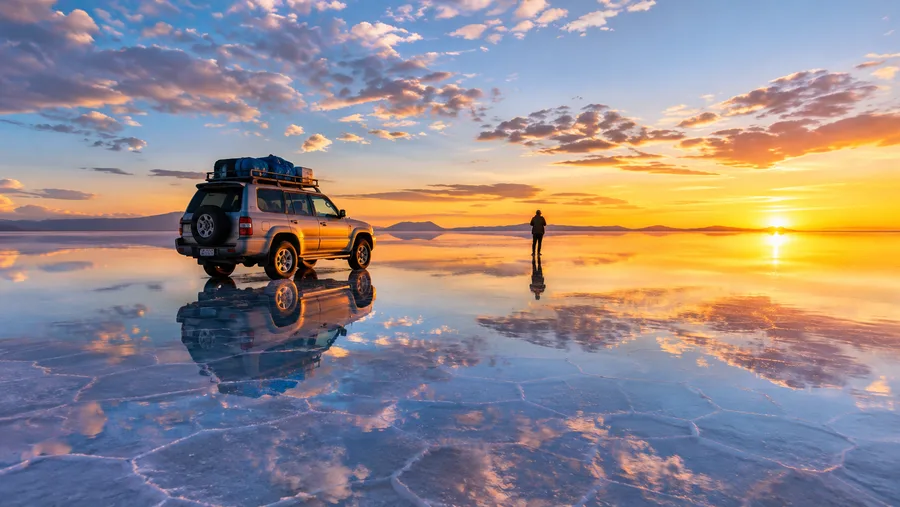
The experience shifts completely depending on the month you arrive. Between late December and March, seasonal rain collects on the surface, creating a mirror that reflects clouds, stars, and vehicles with liquid clarity. Walking out onto flooded salt feels like stepping directly into open sky. Driving through water deeper than a few inches is risky for the 4x4 electrical systems, so drivers constantly test depths with wooden sticks before plowing ahead.
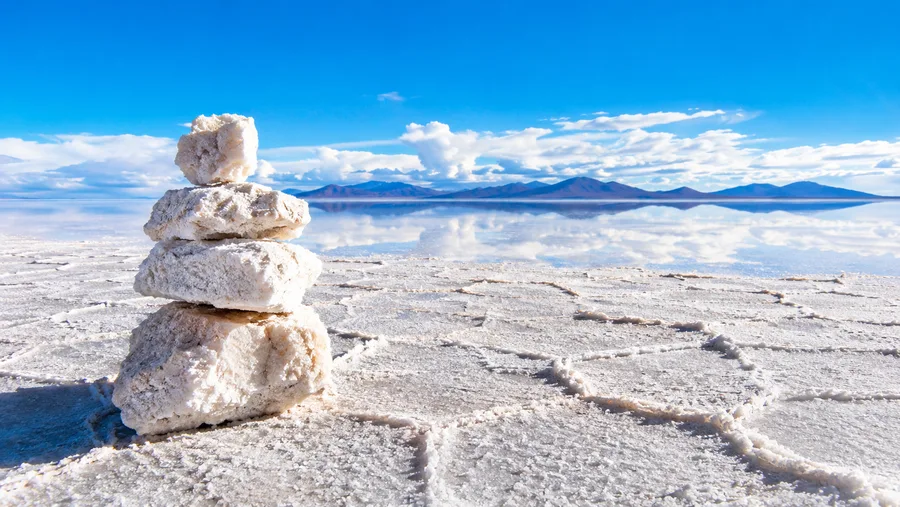
During the dry season from May through November, the water recedes completely, leaving behind millions of cracked, raised salt polygons. The landscape turns crisp, blinding, and textured. Both seasons offer entirely distinct visual worlds, so do not let anyone convince you that one is definitively better than the other.
Exploring the Great Train Graveyard and Uyuni Town
Just three kilometers outside the center of uyuni town lies a sprawling, rusted cemetery of British-built steam locomotives. Back in the late 1880s, Uyuni served as a major railway distribution hub moving silver, tin, and minerals from inland mines down to Pacific ports in Chile. When the mining industry collapsed under dropping global commodity prices and border treaties in the 1940s, the locomotives were abandoned right where the tracks ended. The salt winds have been stripping their iron hulls ever since.
Uyuni city bolivia itself is a windblown, frontier outpost. It is not pretty, but it has a rugged charm once you duck into the tiny pizzerias or warm up with hot api and fried pasteles near the central market. Most overland expeditions kick off from dusty garages scattered around Avenida Ferroviaria, where roof racks get piled high with spare tires, jerrycans of gasoline, and crates of fresh vegetables.
Note: Tour operators swarm the train cemetery between 9:00 and 10:30 on their way out to the salt flat. Visit early at 7:30 or after 17:00 if you want photos of the rusted hulls without fifty people climbing all over them.
If you have an afternoon to kill in town before your expedition leaves, run through a few practical chores to make the salt journey bearable:
- Cash withdrawals: Pull all the cash you need from the ATMs around the main plaza, because card machines do not exist once you hit the salt flats.
- Thermal gear: Buy cheap alpaca gloves, thick beanies, and wool socks from the street stalls along the rail tracks.
- Snack supplies: Stock up on water, citrus fruit, and sweet biscuits at the municipal market to fight high-altitude dry mouth.
- Lip protection: Grab SPF 50 mineral sunscreen and petroleum jelly from a local farmacia to prevent cracked lips from dry salt winds.
Book your Salar de Uyuni tour experience:
Venturing North to the Slopes of Salar de Tunupa
The northern edge of the flats feels like a completely different journey. Far fewer jeeps make the trek up toward the base of Tunupa, an extinct volcano striped in bands of rust, ochre, sulfur yellow, and deep purple. The salt crust along this sector is often called salar de tunupa by locals who revere the mountain as an ancient maternal deity in Aymara mythology.
At the mountain's foot sits the tiny stone hamlet of Coquesa. A short, steep hike from the village brings you to a small cave sheltered under volcanic rock containing several naturally preserved pre-Inca mummies. They date back hundreds of years, seated upright in woven baskets with hair and textiles still intact due to the dry, salty mountain air. The local caretaker unlocks the iron gate with an old brass key and explains the burial customs in hushed Spanish.
Down around the wet margins of Coquesa's shoreline, large flocks of James's and Andean flamingos gather to sift through muddy brine for tiny crustaceans. Seeing vivid pink feathers set against the burnt-orange scree of Tunupa is spectacular. The air here smells slightly of damp earth and sulfur, a sharp contrast to the antiseptic dryness of the central flats.
Key Attractions Across the Uyuni Region
Many travelers choose a multi-day route like the salar de uyuni 3-day tour to reach the high-altitude deserts stretching south of the salt crust. Deciding which landmarks to prioritize depends on how much time you have and how well you handle rugged jeep travel at altitude.
| Site Name | Typical Time Needed | Entry Fee (BOB) | Highlight |
|---|---|---|---|
| Isla Incahuasi | 1.5 hours | 30 | Giant trichocereus cacti, coral fossils, 360-degree salt views |
| Train Graveyard | 45 minutes | Free | Rusted British locomotives from the 1890s mining boom |
| Coquesa Mummies | 1 hour | 20 | Pre-Inca preserved remains in a volcanic cave below Tunupa |
| Ojos de Sal | 20 minutes | Free | Bubbling cold groundwater breaking through the salt crust |
| Laguna Colorada | 2 hours | 150 (SERNAP) | Blood-red algae lake hosting thousands of wild flamingos |
Beyond the salt basin itself, the southern circuit takes you past bubbling mud pools at Sol de Mañana and natural hot springs where you can soak at 4,200 meters. The journey can be physically exhausting due to corrugated washboard tracks, but it connects you with wild terrain rarely found elsewhere on earth.
To keep yourself healthy and functioning across these long driving days, keep a few survival habits in mind:
- Hydration targets: Drink at least three liters of still water per day, even if the cold makes you forget to drink.
- Battery conservation: Keep camera batteries and mobile phones wrapped inside a wool sock inside your sleeping bag, because sub-zero nights kill lithium charges in hours.
- Layer management: Peel off heavy fleeces before you start sweating on uphill climbs, then zip back up the second you stop walking.
Frequently Asked Questions about things to do in salar de uyuni
What are the absolute must-do things to do in salar de uyuni on a short trip?
If you only have one day, focus on the Train Graveyard, Isla Incahuasi, perspective photography on the open salt flats, and watching the sunset light turn the crust purple. That covers the iconic visual hallmarks of the region without forcing you to rush.
Can you visit Salar de Uyuni independently without a tour?
You can rent a 4x4 in La Paz or Uyuni, but it is risky unless you have serious desert driving experience, GPS coordinates, and satellite communication. Whiteout conditions, hidden brine holes, and zero cellular signal make navigating dangerous for solo drivers.
How bad is altitude sickness during the activities?
Uyuni sits at 3,656 meters, and surrounding lakes reach nearly 5,000 meters. Headaches, mild nausea, and shortness of breath are common on day one. Spend two days acclimatizing in Sucre or La Paz before booking long tours, drink plenty of water, and chew coca leaves or take soroche pills if needed.
Is it possible to stay overnight in a hotel made of salt?
Yes, several hotels on the salt flat rim near Colchani have walls, tables, and bed platforms constructed from solid salt blocks. They range from simple hostels with shared bathrooms to luxury lodges offering heating, fine wine, and panoramic floor-to-ceiling windows.
Quick Reference
- Elevation: 3,656m to 5,000m
- Incahuasi entrance: 30 BOB
- Best mirror season: Jan to Mar
- Dry cracked crust: May to Nov
- Nearest hub: Uyuni town
Book your Salar de Uyuni tour experience:
Before You Go
A journey into the salt flats strips away the familiar noise of modern travel and replaces it with sheer, quiet space. Come prepared with warm thermals, spare cash, patience for bumpy roads, and a charged camera battery. It is tough on the body, but the sight of sunrise stretching across thousands of miles of crystalline white will stay etched in your mind long after the salt dust washes out of your boots.
Read more about Salar de Uyuni tour.